Everyone's Afraid of the Semicolon — Here's Why They Shouldn't Be
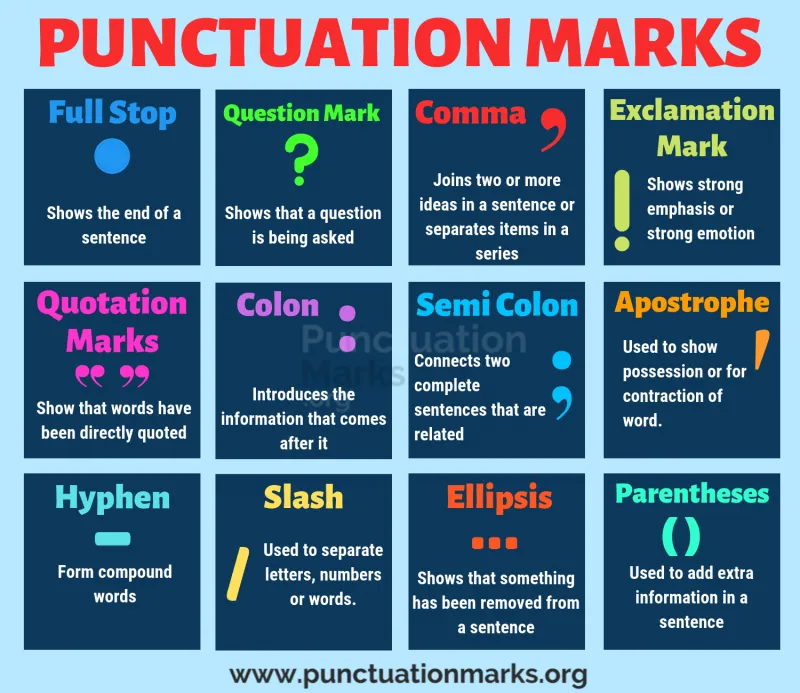
Photo: punctuation marks closeup on paper writing desk, via punctuationmarks.org
There's a punctuation mark sitting quietly in the middle of your keyboard that most writers treat like a live wire. They know it's there. They've seen it in books. They might even admire it when someone else uses it. But the moment they consider putting it in their own writing? Total freeze.
That mark is the semicolon, and it doesn't deserve the fear it gets.
Here at Write Better English, we're all about cutting through the anxiety that keeps people from writing with confidence. So today, we're tackling the semicolon head-on — what it does, why writers avoid it, and how you can start using it in a way that genuinely improves your writing.
Why Writers Are Scared of It in the First Place
Let's be honest about where the fear comes from. Most of us were taught grammar rules in school through a lens of right and wrong, pass or fail. Commas? Sure, everyone uses those — wrong, mostly, but often enough that it feels safe. Periods? Foolproof. But the semicolon always came with a caveat, a footnote, a teacher saying be careful with that one.
That caution stuck. And over time, it calcified into avoidance.
There's also a social element. Using a semicolon feels like a declaration — like you're announcing to your reader that you know something. If you get it wrong, it feels more embarrassing than a misplaced comma. So most writers just... don't bother.
But here's the thing: the semicolon has exactly one primary job, and it's not complicated.
What a Semicolon Actually Does
A semicolon connects two independent clauses — meaning two groups of words that could each stand alone as complete sentences — when those ideas are closely related.
That's it. That's the core rule.
Consider this example:
She submitted the report on Friday. Her manager approved it by Monday.
Both sentences work fine on their own. But if you want to signal that these two events are tightly linked — that one flows directly into the other — a semicolon does that more elegantly than a period:
She submitted the report on Friday; her manager approved it by Monday.
The semicolon tells your reader: these two ideas belong together, pay attention to the connection. It's a relationship signal. And used well, it creates a rhythm in your writing that feels polished without feeling pretentious.
The Three Situations Where Semicolons Shine
Once you understand the basic rule, it helps to see the specific contexts where semicolons do their best work.
1. When two ideas share a cause-and-effect relationship
The presentation ran long; half the audience stopped taking notes.
You could write this as two sentences. But the semicolon makes the connection feel immediate and intentional.
2. When you're using a conjunctive adverb
Words like however, therefore, meanwhile, and consequently are conjunctive adverbs — and when they appear between two independent clauses, they need a semicolon before them and a comma after.
The deadline was moved up; therefore, the team worked through the weekend.
This is one of the most common semicolon scenarios in professional writing, and getting it right instantly elevates how your emails and reports read.
3. When your list items already contain commas
This one surprises people. When you're writing a list and the items themselves include commas, semicolons act as stronger separators to prevent confusion:
The conference will be attended by delegates from Austin, Texas; Portland, Oregon; and Nashville, Tennessee.
Without semicolons there, that sentence turns into a confusing blur of commas.
What the Semicolon Is Not
Part of mastering any tool is knowing its limits. The semicolon is not a fancy comma. You can't use it to connect a dependent clause to an independent one, and you can't use it in place of a colon to introduce a list.
This is wrong:
She loves three things; coffee, deadlines, and clear communication.
That should be a colon. The semicolon only works when both sides can stand alone as complete sentences.
Also — and this matters — don't overuse it. A semicolon placed well creates emphasis. Three semicolons in one paragraph starts to feel like you're showing off, and it makes your writing harder to follow rather than easier.
A Quick Confidence Test
Before you use a semicolon, ask yourself two questions:
- Can the part before the semicolon stand alone as a complete sentence?
- Can the part after it stand alone as a complete sentence?
If the answer to both is yes, and the two ideas are meaningfully connected, you're good. Drop in that semicolon and move on.
If one side can't stand alone, use a comma instead — or restructure the sentence entirely.
The Real Reason to Start Using It
Beyond the grammar mechanics, there's a practical reason to add the semicolon to your writing toolkit: it gives you more control over how your ideas flow.
Writing is about rhythm as much as it is about rules. Short sentences punch. Longer, connected sentences build momentum. The semicolon lets you do something a period and a comma can't quite manage — it creates a pause that's longer than a comma but shorter than a full stop. That middle-ground pause can change how a reader experiences your writing.
Professional writers — the ones whose emails get read, whose reports get cited, whose memos get forwarded — use that kind of control deliberately. They're not dropping semicolons to seem smart. They're using them because they work.
Start Small, Build Confidence
You don't have to overhaul your entire writing style overnight. Start by noticing when you write two short sentences back to back that feel connected. Ask yourself if a semicolon would make that relationship clearer. Try it. Read it out loud. See if it flows.
Then try the conjunctive adverb construction — however, therefore, meanwhile — and make sure you're punctuating those correctly. That one change alone will make your professional writing noticeably sharper.
The semicolon isn't a trap. It's not a test. It's just a tool — one that's been sitting in your kit the whole time, waiting for you to pick it up.