Punctuation With Personality: How the Em Dash Turns Flat Writing Into Something Worth Reading

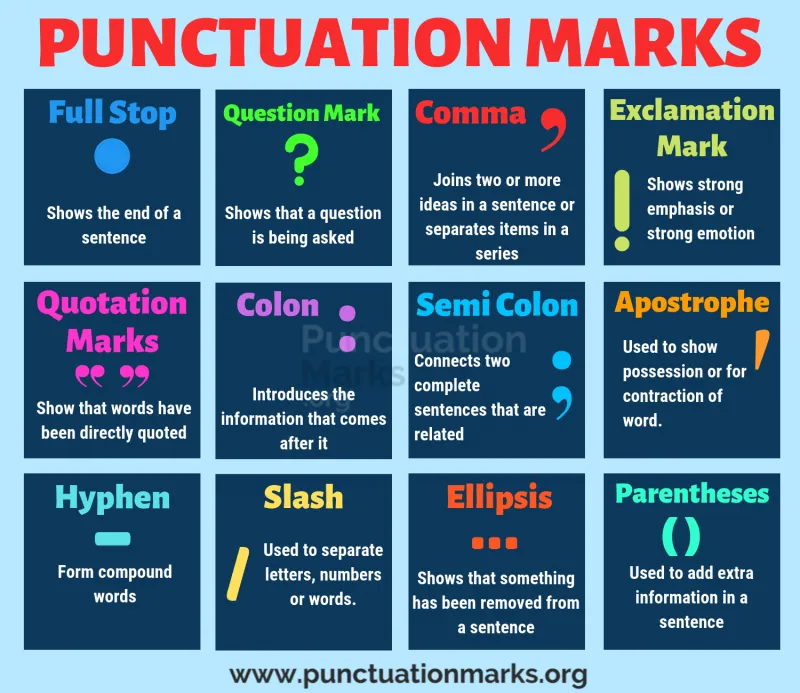
Photo: person writing on laptop with punctuation marks and grammar notes on desk, via www.kevinashleyphotography.com
Most people know three punctuation marks well enough to use confidently: the period, the comma, and maybe the semicolon if they're feeling brave. But there's one mark sitting quietly on your keyboard — the em dash — that can do things none of those can.
It's not fancy. It's not pretentious. And it's definitely not just for novelists. The em dash is a practical, powerful tool that can change the entire feel of a sentence. If you've never really thought about it before, that's about to change.
Wait — What Even Is an Em Dash?
Let's start simple. An em dash looks like this: —
It's longer than a hyphen (-) and longer than an en dash (–). The name comes from typography — it's roughly the width of the letter "M." On a Mac, you type it with Shift + Option + Hyphen. On Windows, it's Alt + 0151 on the numeric keypad. In Microsoft Word, it usually autocorrects when you type two hyphens between words.
You've seen it used in books, magazines, and well-written articles. But it shows up in professional writing far less often than it should — and that's a missed opportunity.
The Problem With Playing It Too Safe
Here's a sentence from a real workplace email, lightly edited:
"The proposal, which had been revised three times due to client feedback and budget concerns that arose in the second quarter, was finally approved by the executive team on Friday."
Technically, that's correct. Grammatically, nothing is wrong. But reading it feels like pushing through wet sand. By the time you reach "Friday," you've already lost the thread.
Now look at this version:
"The proposal — revised three times, delayed by budget concerns, and stuck in executive review — was finally approved Friday."
Same information. Fewer words. And somehow it hits harder.
The dashes do two things at once: they signal a pause that says pay attention here, and they visually break up the information so your eye knows where to land. That's not a stylistic trick. That's clarity.
Three Ways the Em Dash Actually Works
1. It Replaces Clunky Parenthetical Phrases
Commas and parentheses can both set off extra information in a sentence. But they carry different vibes. Parentheses whisper — they say, "this is a side note you can skip." Commas are neutral. Em dashes are confident. They say, "this part matters, and I want you to notice it."
Compare:
- "The new policy (which takes effect January 1) will affect all full-time employees."
- "The new policy — effective January 1 — will affect all full-time employees."
The second version reads faster and feels more direct. The information inside the dashes doesn't feel like a footnote. It feels like a fact.
2. It Creates a Dramatic Pause Before a Payoff
One of the most satisfying ways to use an em dash is to build a sentence toward a point, then deliver it after the dash. Think of it like a drumroll.
- "She reviewed every draft, revised every section, and stayed late three nights in a row — and still didn't get the credit."
- "We tried the workaround, updated the software, and called support twice — nothing worked."
That pause before the final phrase makes the landing feel intentional. Without the dash, both sentences just... end. With it, they close with weight.
3. It Handles Abrupt Shifts Without Awkward Transitions
Sometimes a sentence needs to turn on a dime. Transition words like "however" or "but" work fine, but they can feel stiff in conversational or professional writing. A dash handles the pivot more naturally.
- "I assumed the meeting was canceled — turns out it had just moved rooms."
- "The numbers looked great on paper — the reality was a little different."
No extra words. No formal pivot. Just a clean turn that keeps the sentence moving.
Common Mistakes That Undercut the Effect
The em dash is powerful, but it's easy to overdo. Here's what to watch out for:
Using it too often. If every other sentence has a dash, none of them feel special. Save it for moments where the pause genuinely earns its place.
Replacing every comma with a dash. They're not interchangeable. A dash signals more than a comma — it creates emphasis. Use commas for routine separation and dashes when you want the reader to actually slow down.
Confusing it with a hyphen. A hyphen connects words (like "well-written" or "full-time"). An em dash separates ideas within a sentence. Using a hyphen where a dash belongs is a subtle but noticeable error in professional writing.
What This Looks Like in Real Work Emails
Let's take a before-and-after from a typical workplace scenario — a project update email.
Before:
"We completed the first phase of the project, which included the audit, the vendor review, and the internal sign-off process, and we are now moving into phase two, which will begin next Monday."
After:
"Phase one is done — audit, vendor review, internal sign-off — and we're moving into phase two starting Monday."
The revised version is 18 words instead of 40. It's easier to scan. It sounds more confident. And the dashes make the middle section feel like a checklist rather than a run-on clause.
That's not just better punctuation. That's better communication.
Why This Matters Beyond Grammar
Here's the thing about writing clearly: it signals competence. When your sentences are crisp and intentional, readers trust you more. They assume you know what you're talking about — because you're not burying your point under unnecessary words and awkward structure.
The em dash is part of that. It's what linguists sometimes call a "confidence marker" — a stylistic choice that says you're in control of your writing rather than just hoping it lands.
You don't need to overhaul your entire communication style. Start small. Next time you write a sentence that feels heavy or tangled, ask yourself: is there a pause here that a dash could handle better than a comma? Is there a punchline that deserves a drumroll?
Chances are, the answer is yes.
Want to keep sharpening your writing? Explore more grammar guides at Write Better English — where clearer writing starts with the right tools.